
Blades, zones, lengths
Know the blade.Then the beard.
A rotary head and a foil head cut differently, and the difference turns up first on the neck. This site sorts shaving and beard gear by the cutting system inside it and by the part of the face it has to work on. Nothing here has been tested or ranked, and no characteristic appears that its listing did not state.
Start with a zonePhotograph by Federico Tonini
Cross-sections, not photographs
Five systems
Each of these cuts by a different arrangement of parts, and each arrangement decides what it can do to a face. The drawings show the part that matters.
Rotary heads
Three floating caps with cutters turning underneath. Why the geometry suits a curved jaw, why it draws no line, and what happens when hair gets long.
Rotary headsFoil heads
A perforated sheet over a cutter moving side to side. What the flat surface gains you, what it gives back on a curve, and why lather changes the feel of a pass.
Foil headsSingle-blade hybrids
One double-sided blade that trims on a comb and shaves without one. What sits between a foil and a trimmer, and what it deliberately does not do.
Single-blade hybridsT-blade outliners
A straight cutter set wider than its housing, with a square corner at each end. What an exposed edge is for, and what it does if used for anything else.
T-blade outlinersDual-edge rotary tips
The smallest cutting system here: a cylinder turning inside a slotted cap. Why the cap matters more than the edge, and why depth is fixed by design.
Dual-edge rotary tips
Where the hair actually is
Six zones
The arrows on each dial show the way hair lies in that area. It is the reason one appliance behaves like two different appliances between a cheek and a throat.
Cheeks and jawline
Downward across the flat of the cheek, turning as it reaches the jaw, and often reversing altogether under the chin.
Photograph by Salah Regouane
Cheeks and jawlineMustache and lip
Splitting outward from the middle, running down and away toward each corner of the mouth, with the two halves rarely quite matching.
Photograph by The Skin and The Beard Story
Mustache and lipSideburns and temples
Downward and slightly backward toward the ear, with the hair changing from head hair to beard hair somewhere in the middle without announcing where.
Photograph by Jonathan Cooper
Sideburns and templesNose and ears
No single direction. Hair in a nostril and along the rim of an ear sits at whatever angle it started at, which is why nothing here is worked with the grain or against it.
Photograph by Juan Domenech
Nose and earsScalp
Radiating outward from a crown, which means the direction changes continuously and there is no single stroke that suits the whole head.
Photograph by Fábio Alves
Scalp


One row per product group
One per group
Each row below is the listing holding the first badge in its group, and every badge on this site is awarded on a figure or a fact from the listing itself. The links go to the group, not to a shop.
 Honest Amish Beard Oil, 2 ozOils and balmsThe listing states a blend of seven or more natural oils.Beard Oils and Balms
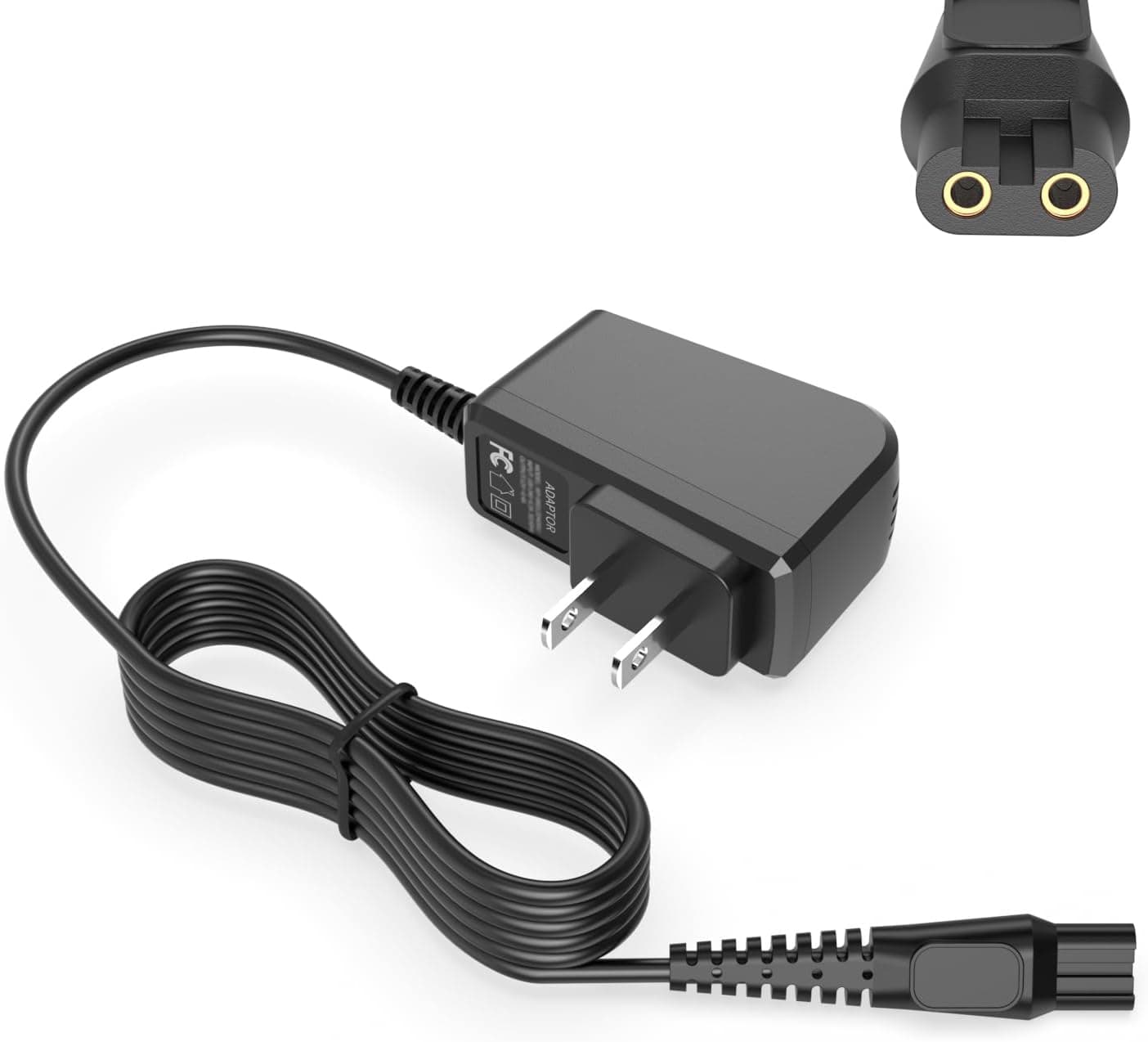 Superer 15V Charger for Philips shavers and trimmersPower and refillsThe listing states a 15V output.Power and Refills
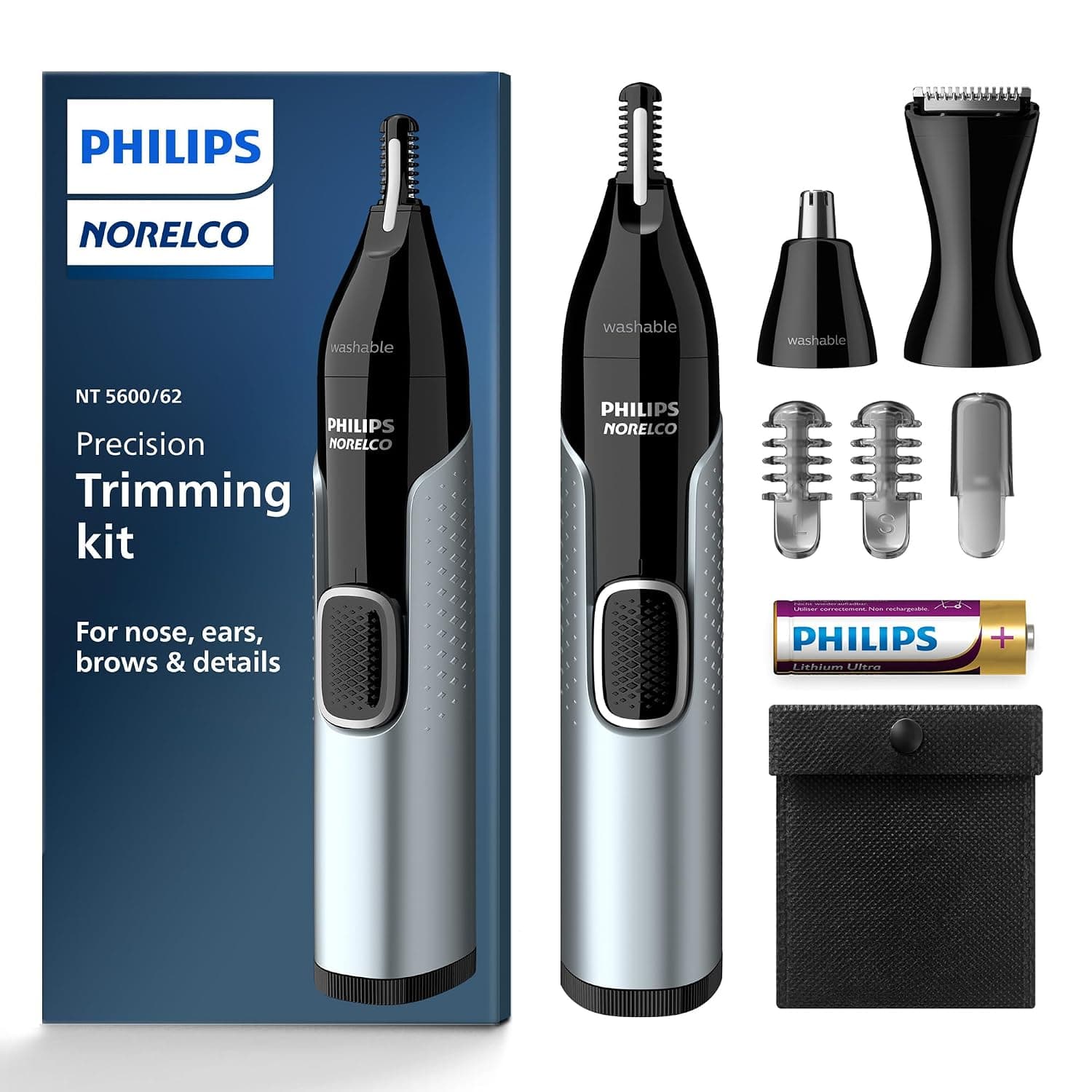 Philips Nose Trimmer 5000 NT5600/62Nose and earThe listing states a nose trimmer.Nose and Ear Trimmers
 Philips Norelco 3600 Rotary Shaver S3243/91RotaryThe listing states 27 self-sharpening ComfortCut blades.Rotary Shavers
 Panasonic ARC5 Foil Shaver ES-LV65-SFoilThe listing states a 5-blade foil.Foil Shavers
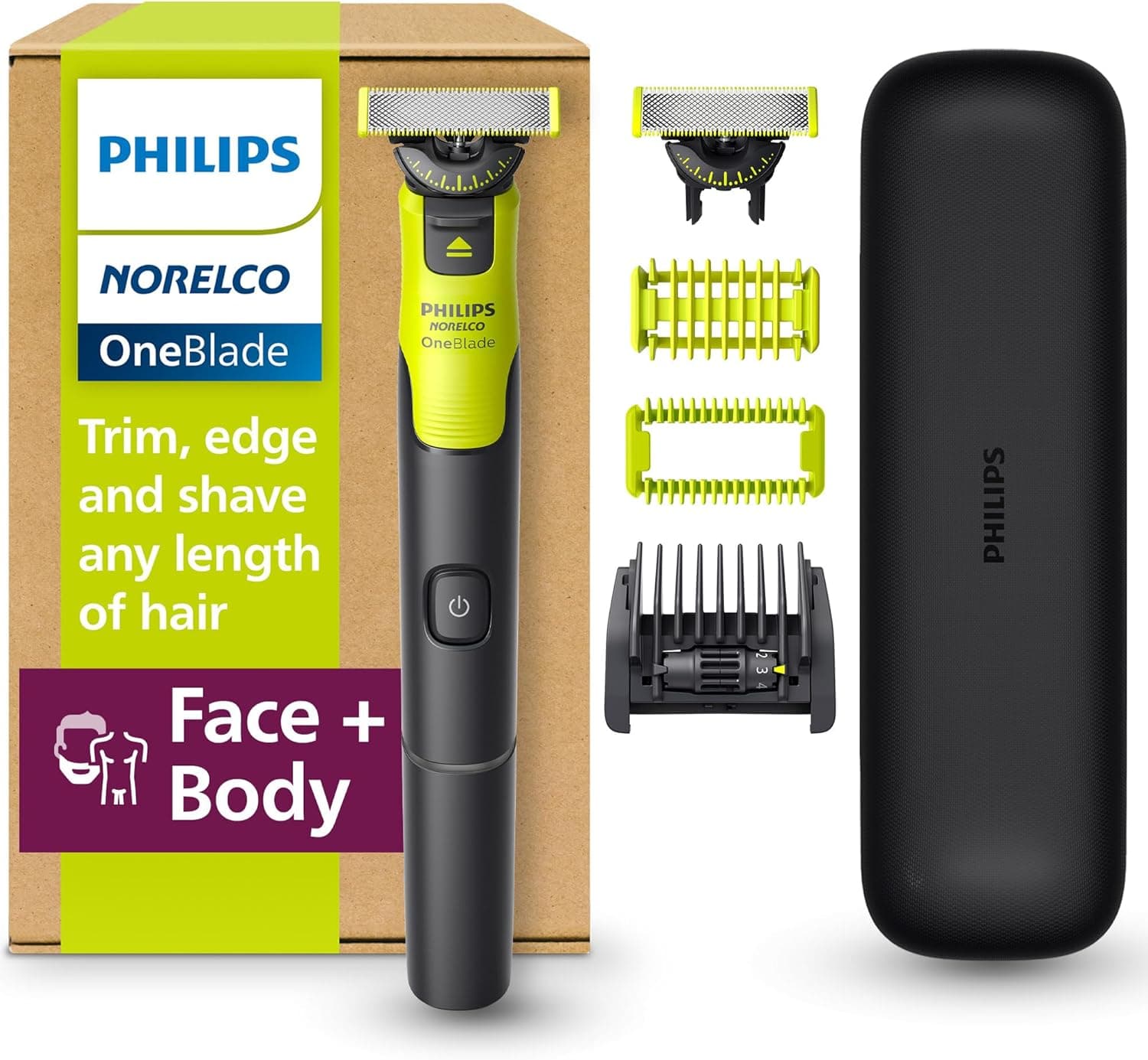 Philips OneBlade 360 Face and Body QP4631/90Single bladeThe listing states a 360 blade.Single-Blade Hybrids
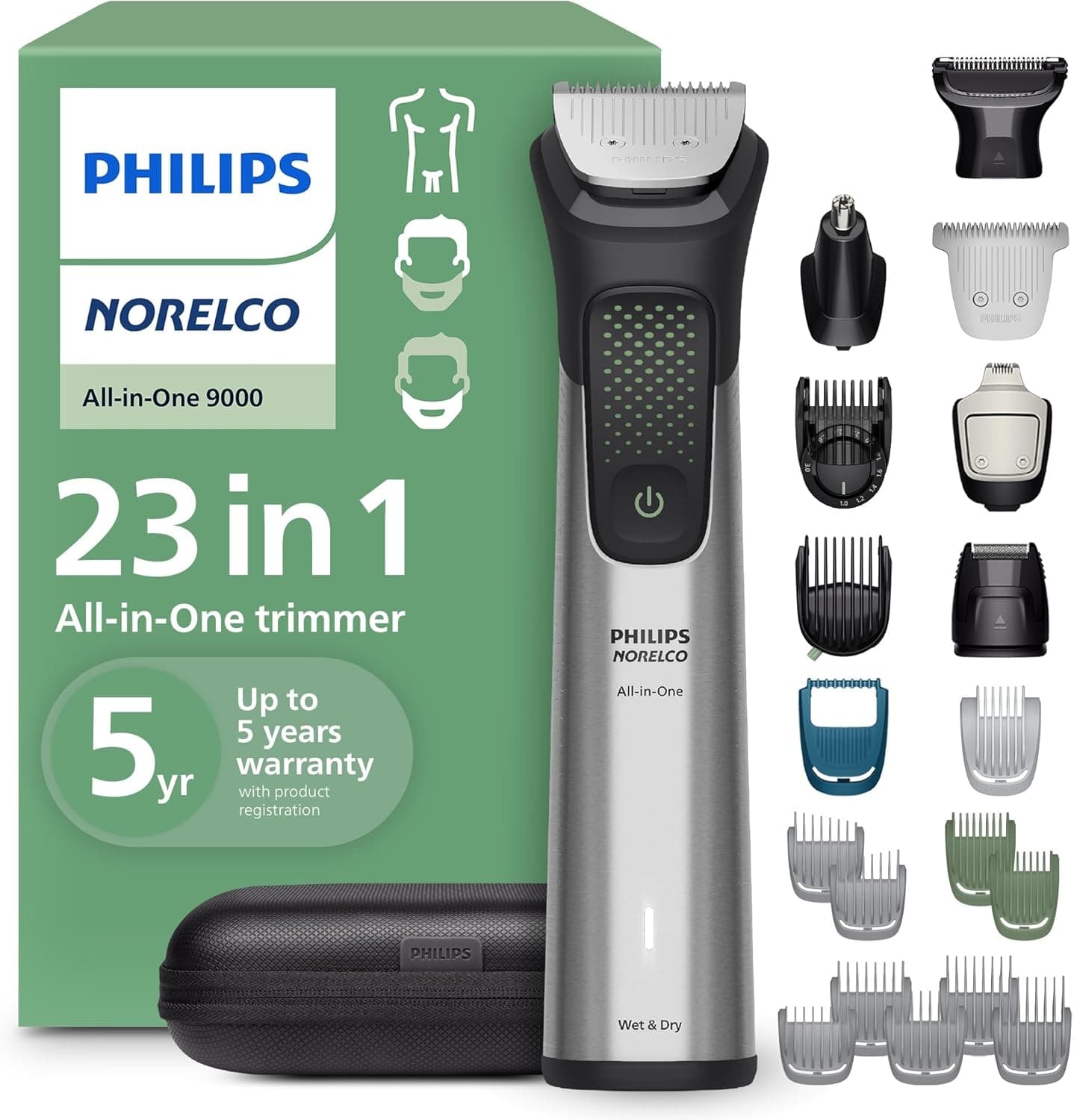 Philips Norelco 9000 All-in-One 23-in-1 MG9575/49TrimmersThe listing states a beard styler, nose and detail trimmer.Beard Trimmers
Four recurring mistakes
Where people go wrong
- Buying a second appliance to fix a problem the first one never had. Most complaints about patchiness are complaints about length, and length is free to change.
- Reading a number in a product name as a list of abilities. It counts the objects in the box, and most of those objects are combs.
- Treating a plug that fits as a plug that matches. Two supplies here state different voltages and look almost identical in a photograph.
- Expecting one mechanism to do every job. Nothing on this site draws a clean line and covers a whole cheek equally well, and the listings do not claim otherwise.
In this order
Before anything else
Work out what you own
Turn the appliance over and find out which of the five systems is inside it. Almost nobody knows, and it decides what the thing in your hand can and cannot be asked to do.
Pick the area that bothers you
A neck is not a cheek and a nostril is not either of them. Naming the area narrows the question from a whole catalog to a page, and often to nothing at all.
Only then look at listings
By that point you are checking a specific claim against a specific need, which is a two-minute job. Starting at the listings is how people end up with a drawer.